

12.12.2025

Obtaining a residence permit in Russia for foreign nationals: who is eligible for the simplified procedure, how to prepare the required documents, and processing timelines. Current requirements for 2026.
Applying for a residence permit in Russia is a key step for any foreigner planning to live in the country long-term, work without restrictions, and eventually apply for citizenship. This status grants extensive legal rights and greatly simplifies all matters related to migration registration. As of early 2026, the rules remain stable, but application screenings have become more thorough, so careful preparation of documents is essential.
✓ Since 2019, most Russian residence permits are issued without a fixed expiration date, with exceptions applying to certain categories.
✓ Standard processing time takes about 2–4 months, while simplified procedures can be faster.
✓ The government fee for a residence permit is 6,000 RUB.
✓ In most cases, prior acquisition of a temporary residence permit is required.
✓ A foreign national holding a residence permit is entitled to work without a patent and is not restricted by region.
✓ Permit holders must confirm their residence each year by filing a notification with authorities.
✓ Obtaining a residence permit is a mandatory step before applying for Russian citizenship via the general procedure.
A residence permit for a foreign citizen in the Russian Federation is an official document confirming the holder’s right to reside in Russia on a permanent basis. Its form, issuance procedure, and associated rights are established by Federal Law No. 115-FZ “On the Legal Status of Foreign Citizens.”
In practice, a Russian residence permit is issued as a small booklet (blue cover for foreign citizens, green cover for stateless persons) containing personal data, issuance details, and stamps from migration authorities. Stateless persons follow a slightly different application procedure. For stateless individuals, document requirements, registration, identity verification, and a number of checks are governed by separate regulations, as they do not possess a national passport.
There is also an alternative format of the residence permit – a plastic ID card with biometric data – which is being introduced gradually. This biometric residence card is not yet mandatory and is still used on a limited basis.
Since 2019, Russia issues a residence permit that does not require renewal every few years. Exceptions apply to certain categories, such as highly qualified specialists, certain state program participants, and stateless persons. These groups may still be issued permits with a fixed term.
The difference between a permanent residence permit, a temporary residence permit, and citizenship is based on the scope of rights granted and the level of integration into the legal system of the Russian Federation.
A temporary residence permit is issued to foreign nationals who have no grounds to apply for a residence permit immediately. This status is granted for a period of up to three years, is tied to a specific region, and cannot be extended beyond its validity (non-renewable). However, after 8 months of residence under the temporary residence permit, the applicant is eligible to submit documents for a permanent residence permit.
A permanent residence permit confirms the right to permanently reside in Russia and grants significantly broader rights. With a permanent residence permit, foreign nationals have the freedom to choose their place of residence without regional restrictions, the right to work without a labor patent or permit in any constituent entity of the Russian Federation, access to mandatory health insurance services, the right to engage in entrepreneurial activity, and eligibility for simplified procedures for the subsequent acquisition of citizenship.
Russian citizenship is the highest status and grants the full set of constitutional rights and freedoms, including the right to vote, eligibility for government positions, and exemption from migration control.
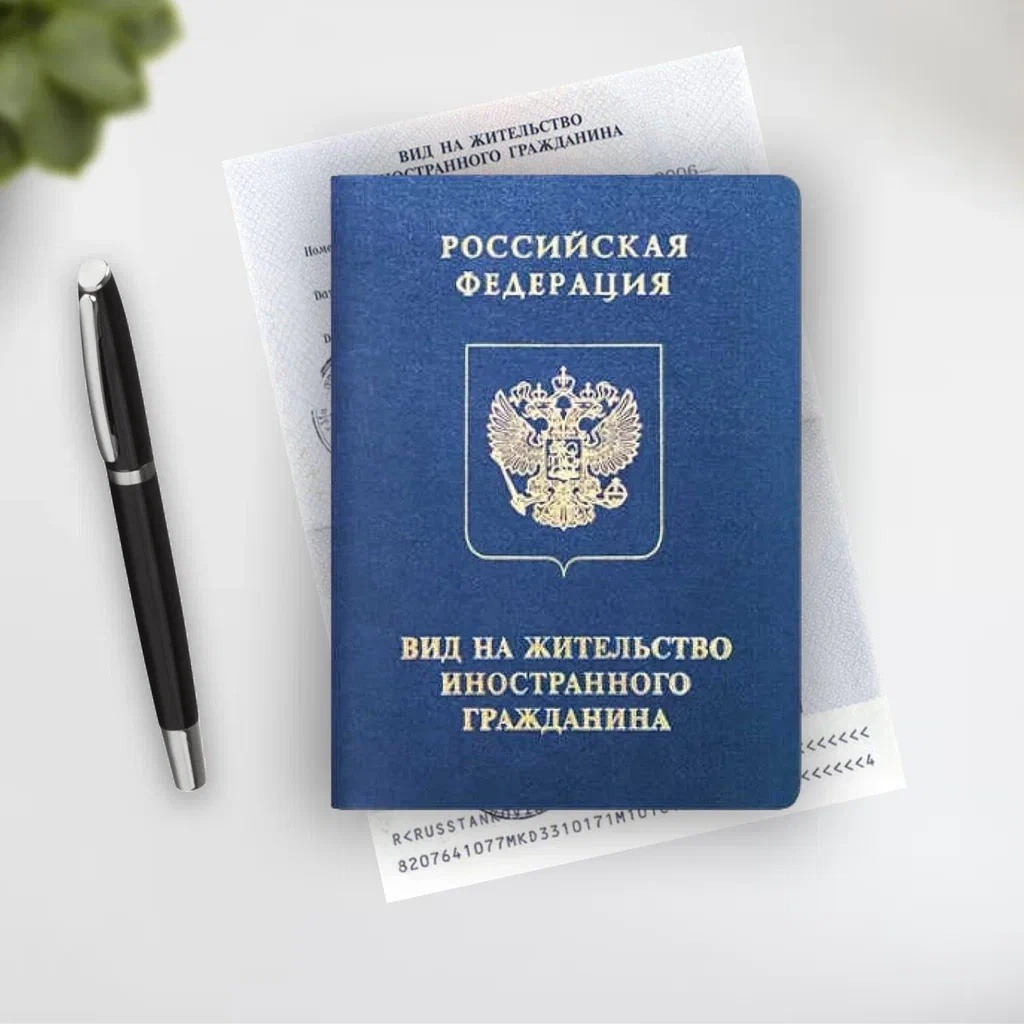
Once a foreigner obtains a residence permit in Russia, they gain many privileges but also assume certain legal responsibilities.
Holding a residence permit in Russia provides foreign nationals with the following rights:
The right to legally reside in the country on a permanent basis without time limitations.
The right to take up employment without a work patent or permit and without regional restrictions – you can work in any region of Russia just like a local resident.
The right to freely change one’s place of residence without additional permissions.
The ability to open bank accounts and use financial services under the same terms as Russian residents.
Access to government services, including obtaining a Taxpayer Identification Number (abbreviated in Russian as INN), Individual Insurance Account Number (abbreviated in Russian as SNILS), and compulsory health insurance policy (abbreviated in Russian as OMC).
The right to conduct entrepreneurial activity as a sole proprietor or as a founder of a company.
The right to apply for Russian citizenship under the general or simplified procedure.
Access to social services within the limits established by Russian legislation.
Resident status entails obligations that must be fulfilled:
Comply with all migration regulations and laws of the Russian Federation.
Confirm residence in Russia by submitting an annual notification.
Notification of the Ministry of Internal Affairs regarding a change of residential address.
Register at the place of permanent or temporary residence.
Comply with tax legislation and currency control regulations.
Provide documents upon request by immigration officials or police.
As of early 2026, there are two primary pathways for obtaining a residence permit in Russia: the general procedure (based on prior receipt of a temporary residence permit) and the simplified procedure (without obtaining a temporary residence permit). Each pathway is intended for different categories of applicants and has its own timeline and requirements.
The general procedure is the primary method for foreign nationals to obtain a residence permit in Russia. First, the foreign national applies for a temporary residence permit, undergoes fingerprinting, complete a medical examination, and register their place of residence. After one year of residence under a temporary residence permit, the applicant becomes eligible to apply for a permanent residence permit. The processing time for a residence permit is approximately two to three months, but may vary depending on the region.
This pathway is suitable for the majority of foreign nationals who are moving to the Russian Federation for the first time and do not have additional grounds for the simplified procedure. The issuance of a temporary residence permit is subject to a quota — an annual limit set by the government for each region separately, in accordance with Article 6 of Federal Law No. 115-FZ “On the Legal Status of Foreign Citizens in the Russian Federation.” For example, in 2025, approximately 1,000 permits were allocated to Moscow, around 200 to St. Petersburg, while the nationwide quota totaled only 5,500. However, certain categories of applicants can obtain a temporary residence permit outside the quota, including spouses of Russian citizens, native Russian language speakers, participants in the State Resettlement Program, parents of minor Russian citizens, and several other categories.
Russian law provides for a number of categories under which a foreign citizen can bypass the temporary residence permit stage and apply directly for a permanent residence permit under a simplified procedure. These provisions are outlined in Article 8(2) of Federal Law No. 115-FZ “On the Legal Status of Foreign Citizens in the Russian Federation,” which specifies the cases in which a residence permit may be issued without a prior temporary residence permit. The application review period is typically shorter, as the mandatory one-year residency on a temporary permit is waived.
Below are the main categories eligible to apply for a residence permit in Russia under the simplified procedure:
Having a Russian citizen parent or child: If the applicant’s mother or father (or son/daughter) is a Russian citizen who permanently resides in Russia, the foreigner can apply for a residence permit directly on the basis of this family relationship. This basis does not include having a Russian spouse — spouses of Russian citizens do not qualify for an immediate residence permit just by marriage; they typically still need a temporary residence permit first.) The family tie must be proven with birth certificates, passports, and other relevant documents.
Born in the RSFSR and held USSR citizenship: This applies to foreign nationals who were born on the territory of the RSFSR (Russian Soviet Federative Socialist Republic) and previously had USSR citizenship. Such applicants can go straight for a residence permit upon providing documents confirming their place of birth and former Soviet citizenship status.
Citizens of Belarus, Kazakhstan, Moldova, or Ukraine: Nationals of these four countries enjoy a simplified procedure under international agreements. Their residence permit applications are processed faster and with a reduced document list. They must confirm their current citizenship and lack of any entry bans to Russia.
Highly Qualified Specialists (HQS) and their family members: A HQS is a foreign professional invited to work in Russia with a salary above a certain threshold (currently at least 750,000 RUB per quarter). Highly qualified specialists (and their immediate family) can get a residence permit for the duration of their work authorization. The employment contract and proof of the high salary level are required to confirm HQS status for this basis.
Qualified Specialists in in-demand professions: This refers to specialists included in the Ministry of Labor’s list of in-demand occupations. If a foreigner has worked in Russia for at least one year in a profession from that list, they may be eligible for a direct residence permit.
Graduates of Russian universities with honors diplomas: Foreign graduates who completed an accredited Russian university with distinction can apply for a residence permit immediately after graduation. The degree must be earned via full-time study in a bachelor’s, specialist, or master’s program, and the diploma must be an honors diploma.
IT specialists working in accredited companies: If a foreign specialist is employed in a company accredited by the Russian Ministry of Digital Development, Communications, and Mass Media (Mintsifry) in the IT sector, they (and their immediate family) can apply directly for a residence permit.
Native Russian speakers: If a foreigner has been officially certified by a special commission as a native Russian speaker, they gain the right to apply for a residence permit without a temporary residence permit. To qualify as a native Russian speaker, an individual must provide documented evidence that their relatives formerly resided on the Russian territory.
Participants of the State Resettlement Program for Compatriots: Foreign citizens who participate in the Russian government’s State Resettlement Program for Compatriots (and their family members included in the program) can directly receive a residence permit. They must provide their participant certificate and documents confirming their relocation to the chosen region in Russia under the program.
Repatriates (historical/cultural ties): This basis applies to individuals who can demonstrate cultural or historical ties to Russia; it must be supported by documents verifying their origin.
Investors: Foreign nationals may qualify for a residence permit if they meet the minimum investment requirements (from 15 to 30 million rubles, as established by Government Decree No. 2573). Relevant documents confirming the investment must be submitted for review.
Military personnel on contract: A foreign national who signs a contract to serve in the Russian Armed Forces for at least one year can apply for a residence permit without a temporary residence permit. This right also extends to their family members.
Deported from the Crimean ASSR (and their descendants): If a person was deported from the Crimean ASSR during Soviet times (or is a direct descendant of such a person), they can apply for a residence permit directly. Foreign nationals must provide documents proving the fact of deportation and their family connection to the deported individual.
Individuals who have lost Russian citizenship: This applies to those who previously held Russian citizenship and later lost this status through lawful means. To confirm this, a document proving the renunciation of Russian citizenship must be submitted — typically, this is a decree of the President of the Russian Federation on the termination of citizenship or an extract from such a decree issued by the Ministry of Internal Affairs or a consulate.
Refugees and individuals with temporary asylum: Foreign nationals who have been granted refugee status or temporary asylum in Russia and have resided in the country for an extended period under that status may apply for a residence permit without first obtaining a temporary residence permit. They must submit the official decision confirming the granting of asylum or refugee status.
Other special cases provided by law: The legislation includes some additional situations, often of a humanitarian or special merit nature. For example, foreign nationals engaged in significant scientific or technological projects, those with extraordinary achievements, or other humanitarian grounds might be granted a direct residence permit under specific provisions. These cases are less common and typically require individual consideration and supporting documents as stipulated in the law.
The set of documents required for a residence permit depends on the applicant’s category, the legal basis for application, and the method of submission. Applications may be submitted in person at the local office of the Main Directorate for Migration of the Ministry of Internal Affairs of Russia (abbreviated in Russian as GUVM MVD) or remotely through the official Gosuslugi portal, if online submission is available for the specific applicant category. In all cases, even if you apply online, you will need to appear in person for fingerprinting. The standard processing time is up to 4 months under the general procedure and up to 3 months under the simplified procedure.
All applicant categories must submit a basic set of core documents. Documents submitted for a Russian residence permit must be translated into Russian with notarized certification; if issued outside Russia, they require legalization or an apostille. Following the issuance of the residence permit, a foreign national must replace it upon reaching the ages of 14, 20, or 45, as well as in cases of loss, damage, or change of personal data. The application for replacement must be submitted within 10 days from the date the relevant circumstances arise.
Basic list of documents (for all categories):
Application: two completed copies of the official application form.
Passport of the foreign country (if applicable — also an international travel passport if used to enter Russia).
Migration card and residence registration.
Photographs (size 35×45 mm). 4 photos are required for foreign citizens, and 2 photos if the applicant is stateless.
Document confirming income (employment certificate, pension statement, or bank account statement).
Proof of housing or rental agreement.
Medical certificates and reports as per established requirements (HIV test results; certificate confirming the presence or absence of infectious diseases posing a public health risk, including tuberculosis; and certificate of absence of drug addiction).
Receipt of state fee payment for the residence permit.
Certificate of passing the examination in the Russian language, history, and legislation of the Russian Federation.
The list of required documents may vary depending on the basis for application. For certain categories, the requirements are simplified. For example, proof of income and a rental agreement are not always mandatory; medical certificates and the language exam are not required for foreign nationals who have lost Russian citizenship, as well as for children, pensioners, persons with disabilities, citizens of Belarus, and graduates of Russian schools and universities. Therefore, the provided list serves as a general guideline for obtaining a residence permit through the standard procedure, but specific nuances apply under simplified grounds and must be verified for each applicant category.
For Highly Qualified Specialists: employment contract, salary certificate.
For university graduates: diploma with honors and document confirming the university’s state accreditation.
For native Russian language speakers: commission decision recognizing the applicant as a native speaker.
For participants in the state resettlement program: certificate of participation.
For family-based applicants: birth certificates, passports of parents or children.
For military personnel: military service contract.
For investors: documents confirming investments and proof of the source of funds.
This set of documents serves to confirm the legal basis for the application and helps expedite the review process by migration inspectors.
After obtaining a residence permit in Russia, a foreign national must complete a number of procedures to formalize and maintain their legal status in the country. A residence permit grants the right to move freely, work, and reside in any region of the Russian Federation, but it also requires compliance with mandatory regulations.
Registration at place of residence. Registration is processed through the local office of the Ministry of Internal Affairs or a multifunctional center. The foreign national must provide proof of housing, the residence permit itself, and the property owner’s consent. If the property has multiple owners, each of them must provide personal consent for the registration. If there is only one owner, their consent can be submitted electronically via the Gosuslugi portal.
Temporary registration at place of stay. If you move to a different city, you are required to register at the place of stay. This procedure is initiated and completed by the owner of the accommodation or the inviting host. This is a mandatory component of migration registration.
Obtaining a Compulsory Health Insurance policy. A compulsory health insurance policy provides access to public healthcare services. It is issued free of charge through an insurance company or a multifunctional center.
Obtaining a Taxpayer Identification Number and Individual Insurance Account Number. The Individual Insurance Account Number is required to access social services, while the Taxpayer Identification Number is necessary for tax reporting, entrepreneurial activity, or employment.
Travel Restrictions. Prolonged absence from the Russian Federation may result in revocation of residency status. A permanent residence permit remains valid only if the holder does not leave Russia for more than six months within a calendar year.
Since 2019, residence permits in Russia have been issued without an expiration date. However, the physical document must be replaced in certain cases established by law. The procedure for replacement is regulated by Order No. 417 of the Ministry of Internal Affairs of Russia dated June 11, 2020, which approves the Administrative Regulations for the issuance and replacement of residence permits. While the residency status itself is permanent, the residence permit document is subject to mandatory replacement under certain conditions, including changes to personal identification information or the loss or damage of the original permit.
Upon reaching the ages of 14, 20, or 45.
When personal data changes.
If the document is damaged or there has been a significant change in appearance.
Upon the expiration of the passport or other identity document that carries the permit.
An application for replacement must be submitted within 30 days from the date the reason for replacement arises. Failure to do so may result in violations of migration regulations and administrative liability.
The application is submitted to the Main Directorate for Migration of the Ministry of Internal Affairs or through the Gosuslugi portal. Required documents include a passport, the old residence permit, photographs, and a payment receipt.
Holders of a residence permit are required to submit an annual notification confirming their residence in Russia. This requirement is established by Federal Law No. 115-FZ and applies to all foreign nationals, regardless of the basis on which they obtained their permit.
The notification can be submitted at a local office of the Main Directorate for Migration of the Ministry of Internal Affairs or through a multifunctional center. In certain regions, it may also be submitted via the Gosuslugi portal. Alternatively, it can be sent by registered mail through the Russian Post with a list of enclosures and a return receipt. It is important to note that at least once every five years, the notification must be submitted in person at a local office of the Main Directorate for Migration, regardless of the submission method used in previous years.
The notification must contain information confirming the foreign national’s actual residence in Russia over the past year and proof of financial solvency. Only official documents are accepted as proof of income: an income certificate from an employer (2-NDFL), a tax declaration (3-NDFL), or proof of income from a close relative (amounting to at least the regional subsistence minimum; if sponsored by a relative, the amount must be double the minimum).
It is crucial to adhere to the deadline: the notification must be submitted no later than two months after the end of each full year of residence under the permit. Missing the deadline may result in a fine, and repeated violations may become grounds for revocation of the residence permit.
In case of loss or theft, a duplicate residence permit must be issued. The foreign national is required to notify the Ministry of Internal Affairs within three days and submit an application for replacement.
The rules for obtaining a Russian residence permit are established by federal law, and all grounds for refusal are outlined in Article 9 of Federal Law No. 115-FZ. A residence permit may be denied in the following cases:
Threat to the national security of the Russian Federation.
Criminal conviction or ongoing prosecution.
Multiple administrative violations.
Submission of fraudulent documents or false data.
Previous deportation or administrative expulsion.
Failure to meet the financial support requirement.
Failure to provide proof of legal accommodation.
Violation of migration regulations.
Diagnosis with a dangerous disease posing a public health risk.
Marriage recognized as void or concluded for the sole purpose of obtaining a residence permit.
Departure from Russia for permanent residence in another country.
The reasons for refusal of a residence permit in Russia can often be resolved by timely preparation and verification of the legal basis for the application.
How to Avoid Refusal:
Prepare and submit a complete set of required documents.
Comply with all applicable migration regulations.
Provide valid proof of income and housing.
Seek legal consultation in case of any uncertainties or disputes.
If the migration officer issues a negative decision, you must obtain a written refusal notice. After addressing the reason for denial, the applicant has the right to either reapply with corrected documents or appeal the decision in court or to a higher authority within the Ministry of Internal Affairs.
Grounds for revocation of a residence permit in Russia (relevant for 2025 – early 2026, in accordance with Federal Law No. 115-FZ):
Departure from Russia for permanent residence in another country.
Staying outside Russia for more than 6 months in a calendar year without valid reasons.
Failure to submit the annual residence confirmation notification for two consecutive years.
Submission of false information or forged documents during the application process, if later discovered.
Commission of a serious or especially serious crime, or repeated administrative offenses (not limited to migration violations).
Annulment of a marriage if the residence permit was granted based on marriage to a Russian citizen.
For highly qualified specialists (HQS) and IT professionals: termination of employment and failure to secure a new employment contract within 30 days.
Involvement in extremist or terrorist activities, or posing a threat to national security.
Diagnosis of a communicable disease from the government’s restricted list (except in cases where the applicant is a close family member of a Russian citizen, in which special exceptions apply).
Consequences:
Revocation of a residence permit leads to removal from the Russian Federation and an entry ban ranging from 5 to 50 years, depending on the circumstances.
Obtaining a residence permit in Russia is a significant step toward stable long-term residence and eventual Russian citizenship for foreign nationals. A Russian residence permit grants the right to work without a patent, travel freely throughout the country, and access healthcare and social services. In 2025–2026, updated regulations continue to be in effect, streamlining the procedure for several applicant categories.
This information is current as of late 2025 – early 2026. Laws and regulations may change, so it is strongly recommended to verify all details using official sources before submitting an application:
The Ministry of Internal Affairs of the Russian Federation;
Gosuslugi official portal;
Consultant.ru legal reference system.
The Ministry of Internal Affairs of the Russian Federation (Main Directorate for Migration): https://en.mvd.ru/
Official State Services Portal (Gosuslugi): https://www.gosuslugi.ru
Consultant.ru (Legal Database): https://www.consultant.ru
Garant (Legal Information Service): https://english.garant.ru/
Federal Tax Service (taxpayer identification number, residency status, notifications): https://www.nalog.gov.ru/eng/


