08.12.2025
Thailand Entry Requirements in 2026: Visa, Documents, and the TDAC

Visa-free entry to Thailand for 60 days: how to complete the TDAC form, required documents, rules for children, visa runs, and extensions. Updated instructions for 2026.
Below are the key points travelers should know about entering Thailand in 2026:
-
visa-free entry is allowed for up to 60 days;
-
the visa-free regime can be extended locally for an additional 30 days;
-
as of May 1, 2025, the Thailand Digital Arrival Card (TDAC) is mandatory;
-
your passport must be valid for at least 6 months from the date of arrival;
-
children under 14 may enter Thailand when accompanied by a parent, but once a child turns 14, they must have their own individual passport;
-
entry rules require proof of financial means;
-
you can extend your visa or visa-exempt stay through the Immigration Office.
Thailand now offers 60 days of visa-free entry, and the new electronic registration system TDAC simplifies immigration procedures. Travelers should check passport validity in advance, secure accommodation bookings, and prepare all required documents for entry. This guide summarizes the latest entry conditions and step-by-step procedures for both adults and children.
Do You Need a Visa for Thailand?
Since 2025, Thailand has used updated entry procedures, but the core rule remains the same: in most cases, a visa is not required. The visa-free regime permits stays of up to 60 days for tourism, transit, and short visits not involving employment.
If you plan to stay longer than 60 days, a visa is required. Work-related trips, long-term study, internships, and relocation all require the appropriate visa category. A tourist visa is suitable for those wishing to stay in Thailand for up to 90 consecutive days. For remote workers, the DTV (Destination Thailand Visa) category is available, designed for digital nomads.
Thailand’s entry policy combines visa-exempt entry with an option to extend the stay inside the country. This allows travelers to plan their trips flexibly and avoid obtaining a visa in advance for shorter visits.
What You Need to Enter Thailand: Documents and Requirements
The documents required for entry into Thailand remain largely standard, but since 2025, the TDAC has become mandatory. It is important to ensure that all documents accurately reflect your actual travel itinerary and length of stay.
Passport Requirements
Your passport must be valid for at least 6 months from the date of arrival and have at least two blank pages for stamps. The document must be in good condition, free of tears, water damage, broken pages, or unreadable information. If the passport shows visible damage, immigration officers may deny entry, so it’s important to check the passport’s condition before traveling.
Documents Checked at the Border
-
Valid passport (minimum 6-month validity);
-
return ticket or onward travel itinerary;
-
proof of accommodation — hotel reservation or rental address;
-
TDAC QR code, mandatory for entry starting May 1, 2025;
-
proof of financial means — at least 10,000 THB per person (cash or non-cash). For non-cash proof, a bank statement from any bank is acceptable (checks are selective).
Do You Need Medical Insurance to Enter Thailand?
Entry rules do not require mandatory medical insurance, but it is highly recommended. The average cost is $1–2 per day. Travelers usually purchase a basic travel medical insurance covering outpatient and inpatient care, medical evacuation, emergency services, and access to private clinics. This is the standard coverage accepted by most medical facilities in tourist areas.
In regions such as Phuket and the islands, insurance is particularly important due to limited access to hospitals. Travelers with children or elderly family members are advised to choose extended coverage, as immigration officers may occasionally request proof of insurance for longer stays.
Thailand Digital Arrival Card: How to Complete It
Starting May 1, 2025, the Thailand Digital Arrival Card is mandatory for all foreign travelers. It replaces the paper TM.6 form and speeds up passport control. The TDAC must be completed online before travel and is confirmed by a QR code. The absence of a TDAC QR code is treated as lack of a required immigration form.
Step-by-Step Guide to Completing the TDAC
-
Visit the official website: https://tdac.immigration.go.th.
-
Select the interface language (Thai or English).
-
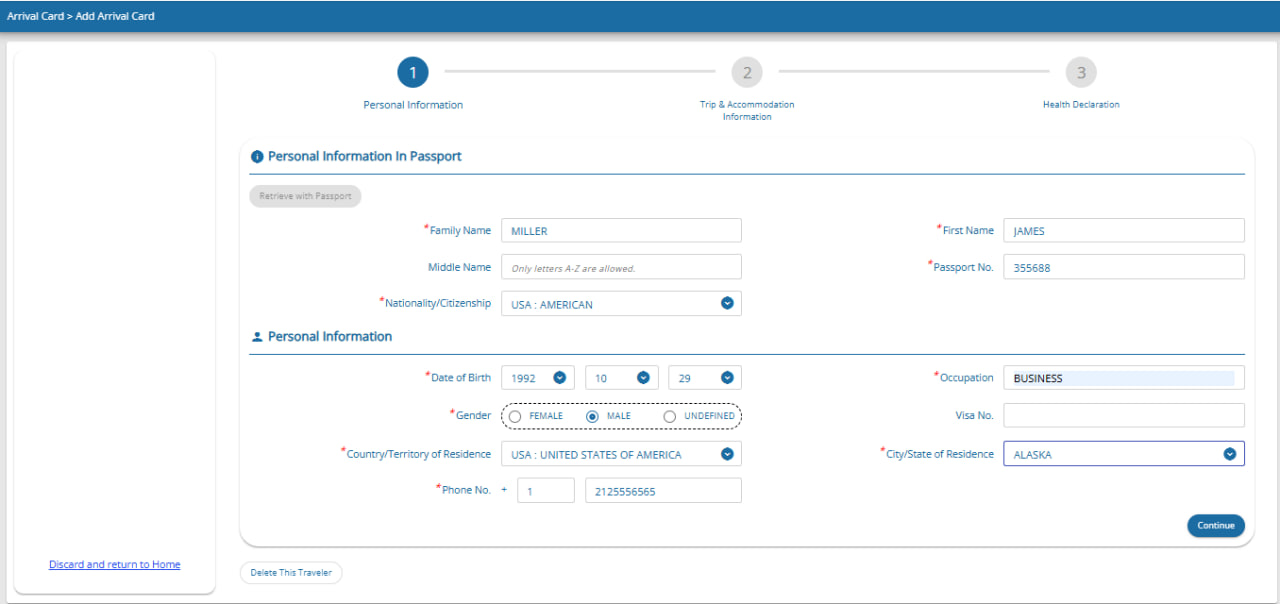
Enter your passport details.
-
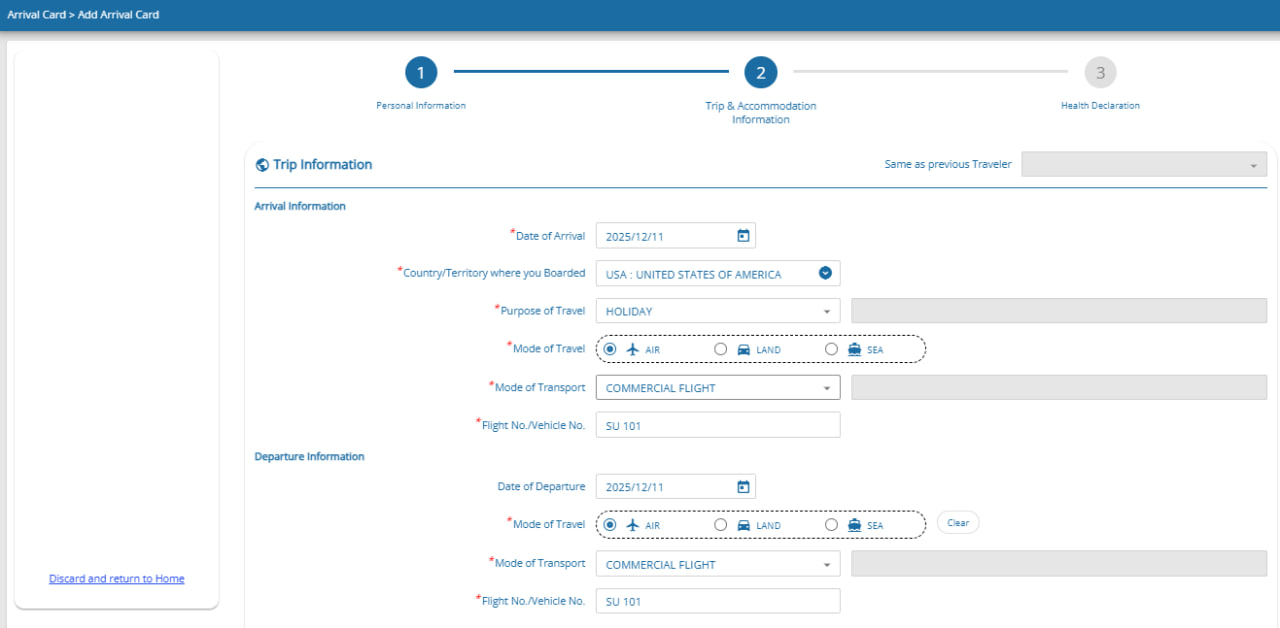
Specify the purpose of your visit.
-
Provide your flight number and arrival date.
-
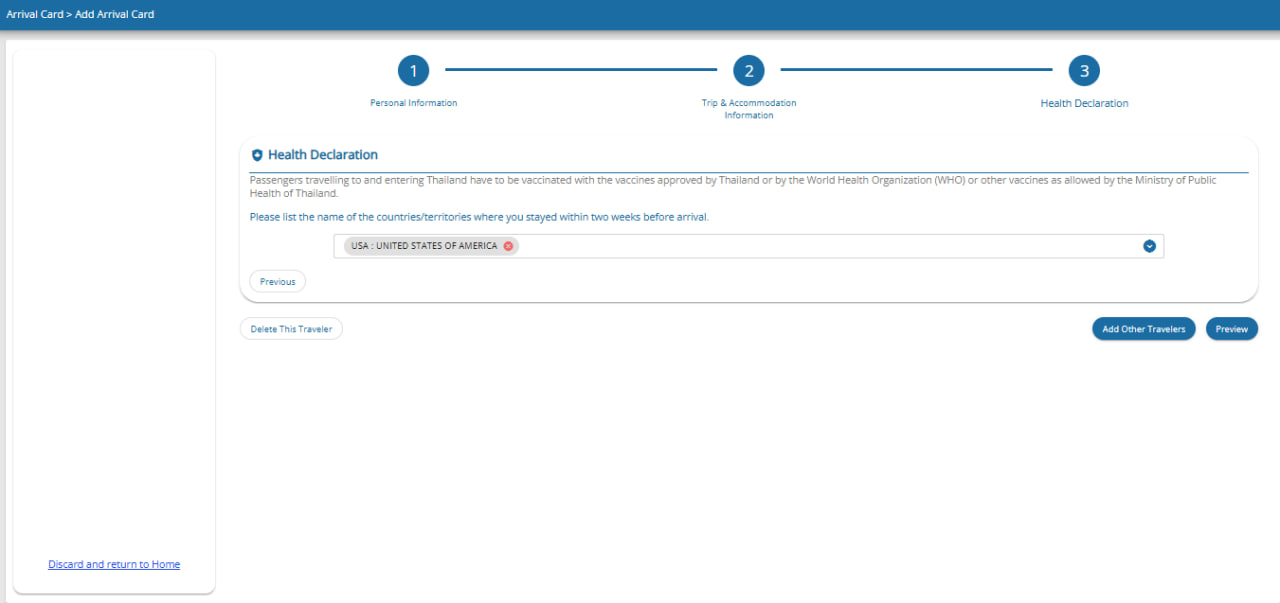
Complete the health declaration.
-
Confirm and submit the form.
-
Receive the TDAC QR code by email.
-
Present the QR code at passport control upon arrival.
Thailand Entry Rules for Children
Children under 14 can enter Thailand either listed in a parent’s passport or using their own passport if one has been issued. After the age of 14, a separate passport is required. If a child travels with only one parent, consent from the other parent is not required for entry into Thailand, but it may be requested when leaving their country of residence. When traveling with a guardian, notarized permission from both parents is required.
Thailand Entry Rules for U.S. Citizens
U.S. citizens can enter Thailand visa-free for up to 60 days with a passport valid for at least six months, a TDAC, and a return ticket. The stay can be extended for an additional 30 days. For longer stays, an appropriate visa must be obtained.
Thailand Entry Rules for UK Citizens
UK citizens can enter Thailand visa-free for up to 60 days, with the option to extend for an additional 30 days. Standard requirements apply: a valid passport, TDAC, proof of accommodation, and an onward travel itinerary. Longer stays require the appropriate visa.
Thailand Entry Rules for Australian Citizens
Australian citizens can enter Thailand without a visa for 60 days and extend their stay for an additional 30 days. A passport, TDAC, and confirmed travel itinerary are required. For stays beyond the tourist period, a visa must be obtained in advance.
Updated Border-Run (Visa-Run) Rules in Thailand
Border runs and visa runs are two different methods to extend your stay in Thailand, but as of 2025, both have become significantly stricter due to increased border control measures
What Is a Border Run?
A border run is a short trip across a land border to obtain a new visa-exempt stamp upon re-entry. These trips usually take several hours or one day. Currently, the most reliable route is through Laos (Vientiane), where the border crossing operates consistently. Border runs are also possible via Myanmar on the Mae Sai–Tachilek route, but this crossing is less stable and sometimes imposes restrictions. Trips through Malaysia are less common due to unstable land-border schedules; travelers often choose flights instead.
What Is a Visa Run?
A visa run involves traveling to a neighboring country, visiting a Thai consulate, and obtaining a new visa. Unlike a border run, this is a full visa process rather than simply renewing a visa-free stamp. Laos (Vientiane) remains the most popular and predictable destination. Other common options include Vietnam (Ho Chi Minh City or Hanoi) and Indonesia (Jakarta or Denpasar). Malaysia (Kuala Lumpur) is also a frequent choice.
Changes in 2025:
-
Border control officers have increased scrutiny of entry frequency — three to four consecutive border runs can raise questions.
-
Officers more often request proof of income, accommodation, and the purpose of the visit.
-
Border crossings with Cambodia are closed.
-
Traditional visa-run routes are reduced; consular visa issuance is now preferred.
-
Many travelers now choose the DTV visa as a safer alternative to repeated border runs. This visa is designed for digital nomads, freelancers, creative professionals, medical tourists, and participants in educational programs. The DTV is valid for five years, allows multiple entries, and permits stays of up to 180 days per visit with the possibility of extension.
How to Extend Your Stay in Thailand
You can extend a visa or your visa-free stay at any Immigration Office in Thailand, including locations in Bangkok, Chiang Mai, Phuket, and Pattaya. Extensions are granted for 30 days and can be applied for once. The fee for all categories is 1,900 THB.
To apply for an extension, prepare the following documents:
-
passport;
-
copies of passport bio page and current entry stamp;
-
one photo (4×6 cm);
-
the TM.7 Form — application form for extension of temporary stay;
-
TM.30 notification from your hotel or accommodation provider.
Official resources to help with travel and documentation:
-
Thailand Immigration Bureau — https://www.immigration.go.th
-
Thailand Digital Arrival Card (TDAC) — https://tdac.immigration.go.th
Thailand’s updated entry rules for 2026 make travel highly predictable: a visa-free regime, straightforward extensions, the TDAC, and clear document requirements. With proper preparation — valid passport, accommodation confirmation, the TDAC, and onward travel plans — border control procedures take minimal time. For longer stays, the appropriate visa should be considered, while for short trips, the visa-exempt option is fully sufficient. Properly prepared documents ensure a smooth entry and a stress-free journey.
More articles on this topic

10.12.2025
How to Obtain a Residence Permit in Thailand: Types of Long-Term Visas, Permanent Residency, and Citizenship

28.11.2025
Where to Travel for Christmas and New Year 2025/26: Best Holiday Markets and Festive Programs

28.11.2025
Turkey Becomes a Global Medical Hub: Key Advantages of Healthcare Abroad

27.11.2025
Transit Visa for Flight Connections — When You Need One and How to Get It

