

10.01.2026

Where to see the Northern Lights: Norway, Finland, Iceland, Russia, and Canada. Our guide covers when the season starts and the best cities and viewing spots for the aurora.
The phenomenon occurs in a zone around the Earth’s magnetic pole and is primarily observed at high latitudes.
The viewing season usually lasts from late September to late March, but specific timing depends on the region and weather conditions.
Winter increases the length of nighttime, but does not in itself guarantee the aurora will appear.
Brightness and frequency depend on solar activity and the level of geomagnetic disturbances.
You can see the Northern Lights in the northern regions of Norway, Finland, Iceland, Russia, Canada, and Alaska — provided there is low cloud cover and minimal light pollution.
The likelihood of sightings is substantially influenced by distance from cities and the possibility of traveling beyond populated areas.
The Northern Lights are a rare natural phenomenon for which people are willing to fly beyond the Arctic Circle, change their usual travel routes, and adapt to the whims of nature. For many, seeing the glowing arcs in the sky at least once in a lifetime becomes a conscious goal rather than a random bonus of a trip. However, the reality is that you cannot “order” the aurora for a specific date: it’s important to choose the right country, region, season, and travel format. These factors directly determine whether the trip will be a dream come true or a disappointment.
This natural phenomenon forms in the upper layers of the atmosphere when charged particles from the solar wind collide with Earth’s magnetic field. As a result of this interaction, oxygen, and nitrogen atoms begin to emit light — this is how the aurora is created, appearing as moving arcs, waves, and flickers of light.
Geography plays a key role. The phenomenon occurs in a special area around Earth’s magnetic pole — called the auroral zone — and it is in these latitudes that it is seen most often. The closer a region is to this zone, the higher the probability of sightings.
The second important factor is solar activity. Even at the right latitude, the aurora might not appear if the solar activity is low.
The third factor is darkness. City lights, twilight, and moonlight reduce the chances of seeing the Northern Lights with the naked eye.
Therefore, winter is not a guarantee. This natural phenomenon occurs more often in winter, but cloud cover and light pollution can completely hide it. That is why the question of where and when you can see the Northern Lights always requires a comprehensive approach.
Common myths:
The Northern Lights are visible every night;
It is always bright green in color;
It’s enough to simply arrive in a northern city and the lights will definitely appear.
In practice, the aurora is unpredictable and requires patience.
The Northern Lights season lasts roughly from late September to late March. During this time, the nights are dark enough to see the glow with favorable solar activity. This period encompasses the main dates that tour operators and aurora forecasts focus on.
Even if you know exactly when the Northern Lights occur, the weather remains the deciding factor. Cloud cover can completely block the sky, so in regions with unstable climates, the chances of sightings are lower than in places with cold, dry air. Sometimes the aurora may appear for just a few minutes during the night and then vanish.
The polar night increases the chances of seeing the aurora thanks to extended darkness, but it doesn’t make it constant. Most often the Northern Lights appear between 9:00 PM and 2:00 AM, though bursts are possible late at night or closer to dawn.
Optimal conditions:
Months from October to March.
Minimal daylight hours.
Low cloud cover and no precipitation.
There is no single “best” place on the map for seeing the Northern Lights. It is important not only where the aurora occurs, but also what conditions a given country provides: climate, transportation, level of light pollution, availability of lodging, and visa rules. For some travelers, comfort will be the deciding factor; for others, budget, or the possibility of seeing the aurora without a visa.
Norway is among the most reliable destinations for those planning to see the aurora with a high probability. The north of the country is located in the zone of greatest auroral activity, and the tourism infrastructure is specifically geared toward observing this natural phenomenon.
The most popular regions are Tromsø, Alta, and the Lofoten Islands. In these areas it’s easy to find organized trips out of the city, night tours with guides, aurora forecasts, and transportation. This option is ideal for travelers who are focused on success (seeing the aurora) and are willing to pay for comfort and guided support.
Pros:
High frequency of aurora sightings.
Well-developed logistics and transport.
A wide selection of Northern Lights tours.
Cons:
High cost of accommodation and excursions.
Changeable weather, especially along the coast.
Useful links:
Official tourism portal of Norway: https://www.visitnorway.com
Northern Lights forecast for Norway: https://www.auroraforecast.com
Information on Tromsø: https://www.visittromso.no
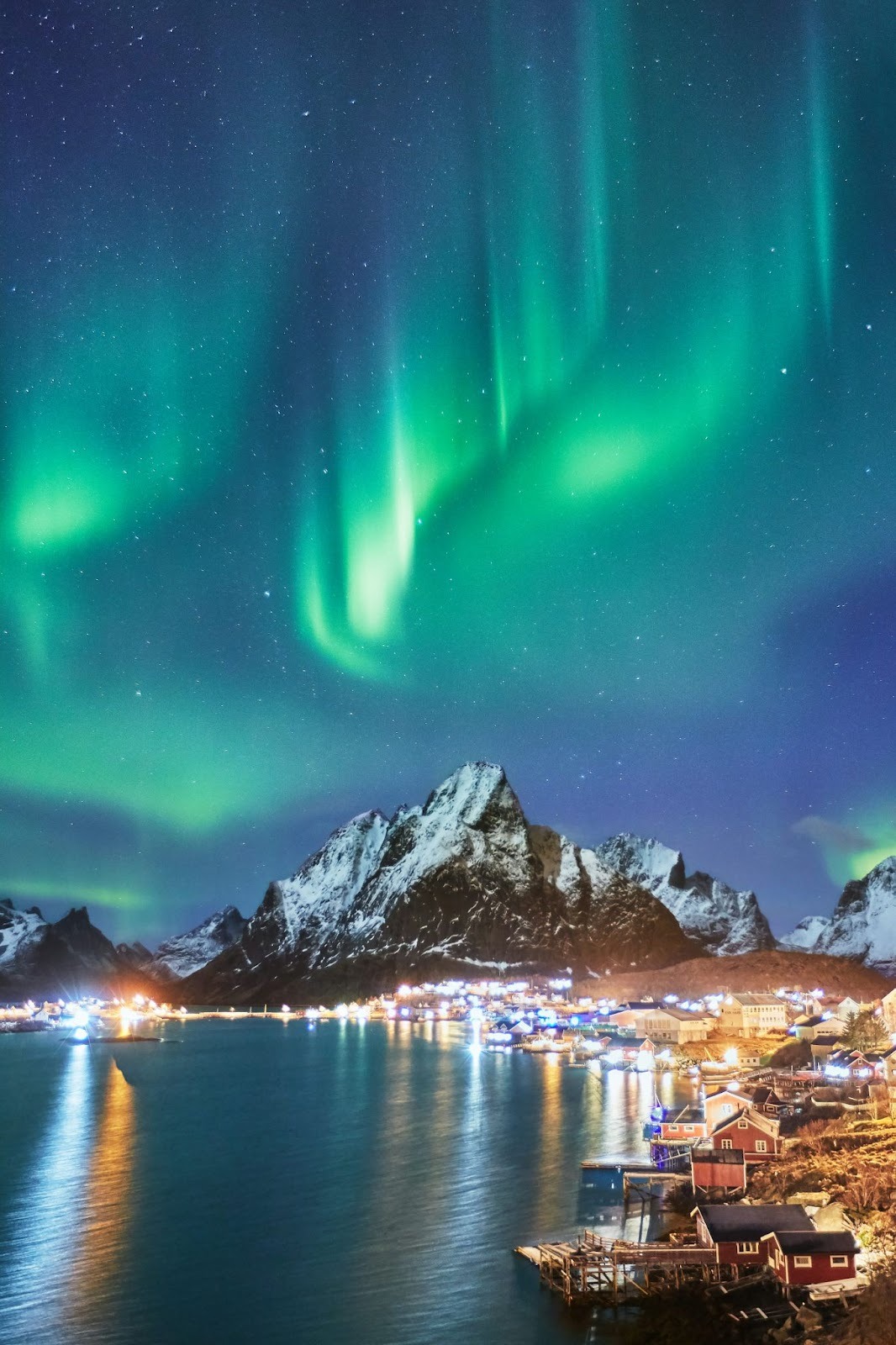
Finland is often chosen by those looking for a calm and unhurried way to observe the Northern Lights. The country experiences fewer abrupt weather changes than Norway’s coastal regions and offers more accommodation options away from major cities.
Lapland is considered the most suitable region — including Rovaniemi, Saariselkä, and Levi. A popular travel format involves staying in countryside hotels or glass igloos, where the aurora can be viewed without going out into the cold at night. This option is well suited for families with children, couples, and those experiencing the Northern Lights for the first time.
Trip format:
Quiet evenings without long drives.
Observing the aurora right near your lodging when visibility is good.
Useful links:
Official tourism website of Finland: https://www.visitfinland.com
Lapland and aurora forecasts: https://www.lapland.fi
Finnish meteorological service: https://en.ilmatieteenlaitos.fi
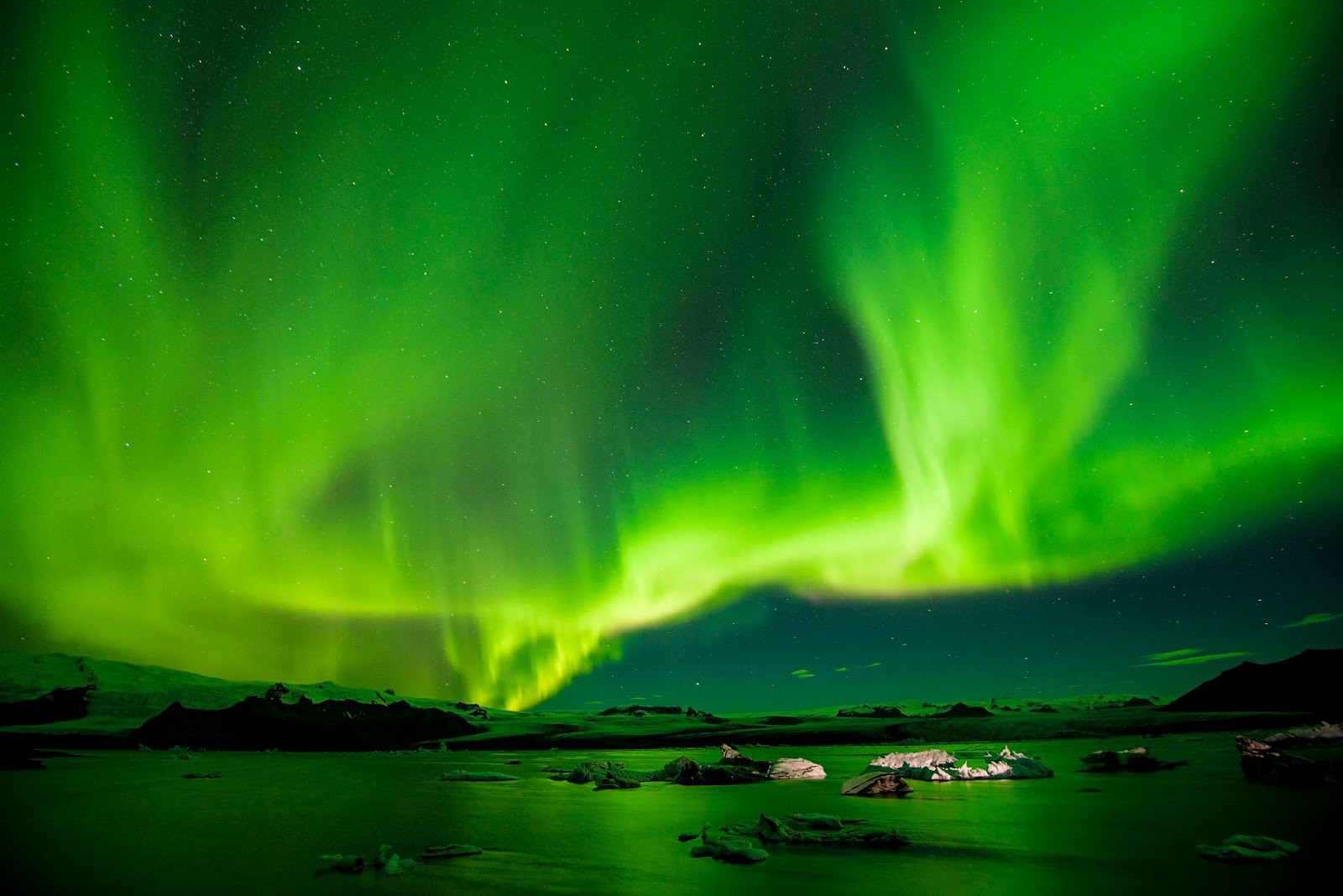
Iceland is a country where the celestial glow is viewed as part of a larger visual experience. Here you can see it against the backdrop of volcanoes, glaciers, the ocean, and lava fields. This destination is often chosen by those who want to combine aurora chasing with active exploration.
The “two-in-one” effect is Iceland’s main advantage. However, weather is a particularly critical factor here: cloud cover can persist for several days in a row.
Features:
High visual appeal of the locations.
Requires mobility and a flexible itinerary.
Frequent trips out of town for clear skies.
Useful links:
Official tourism portal of Iceland: https://www.visiticeland.com
Cloud cover and aurora map: https://en.vedur.is
Road conditions and weather: https://www.road.is
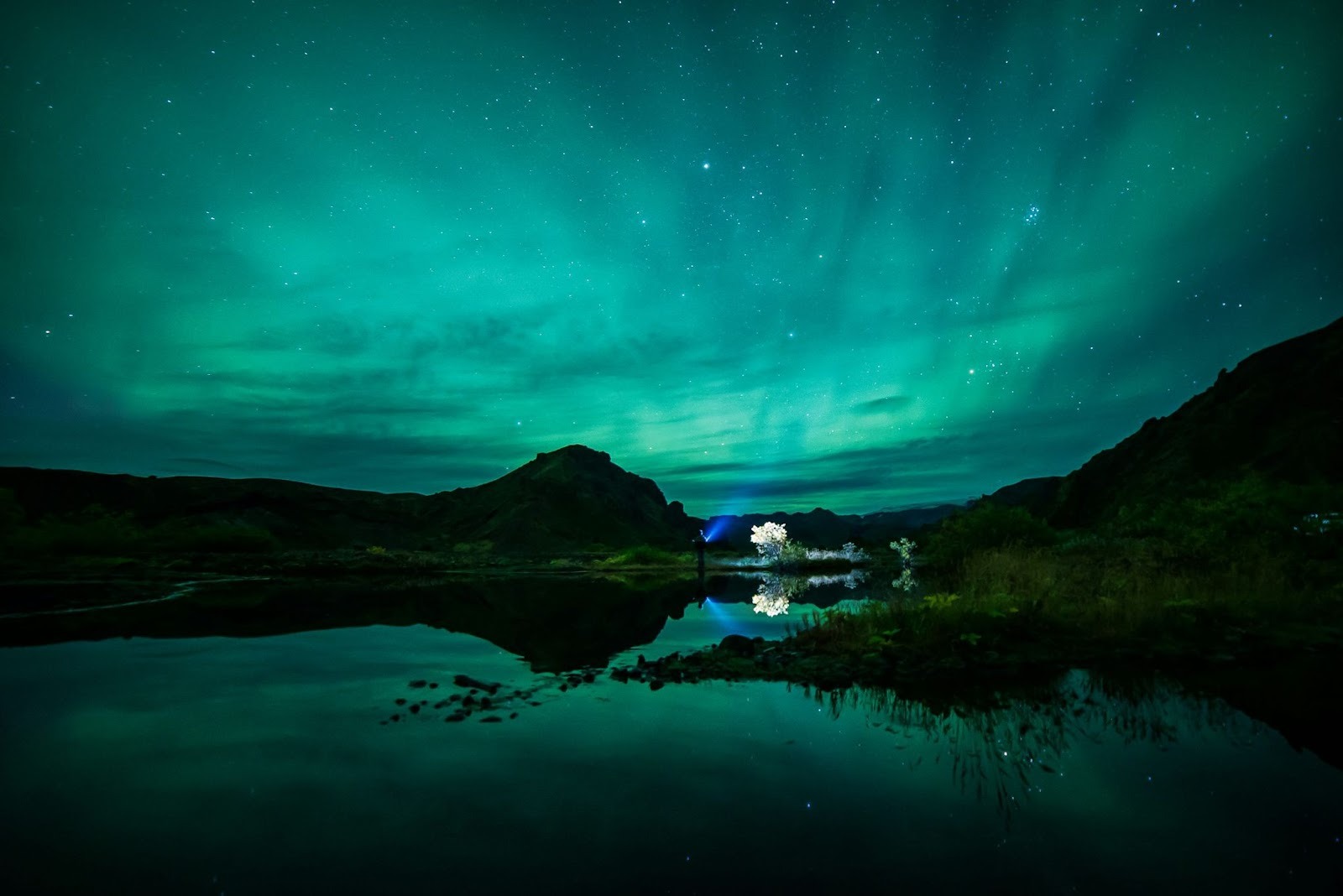
You can witness this polar atmospheric phenomenon in several northern regions of Russia. Key destinations include the Murmansk region, Karelia, Yamal, and the Nenets Autonomous Okrug. The most accessible option remains the Murmansk region: it’s easier to reach, and its tourism infrastructure is developing more actively there than in other northern regions.
Useful links:
Northern Lights forecast for Russia: https://www.gismeteo.ru/aurora
Information on the Murmansk region: https://visitmurmansk.info
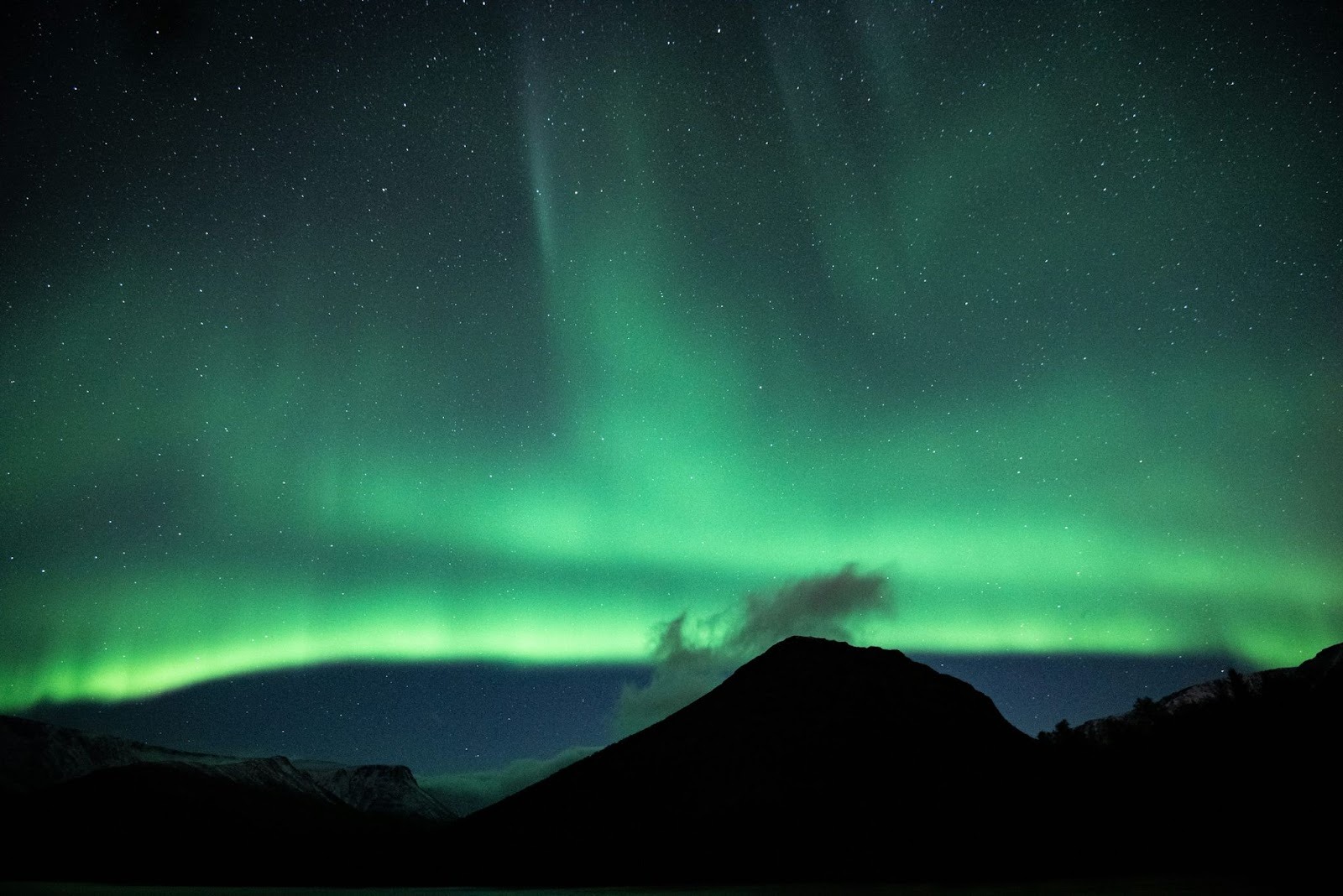
Canada and Alaska are destinations for travelers who are prepared for long journeys and independent planning. Here, the Northern Lights are often seen under conditions of minimal light pollution, and the vast landscapes create a strong sense of true remoteness from civilization.
Popular regions include the Yukon, the Northwest Territories, and Fairbanks in Alaska. Trips are often built in a road-trip style with overnight stays outside of cities.
Features:
High likelihood of sightings in clear weather.
Long distances.
Need to rent a car.
Useful links:
Canada tourism: https://travel.gc.ca
Northern Lights in Canada: https://www.nwtourism.com/aurora
Alaska aurora forecasts: https://www.gi.alaska.edu/monitors/aurora-forecast
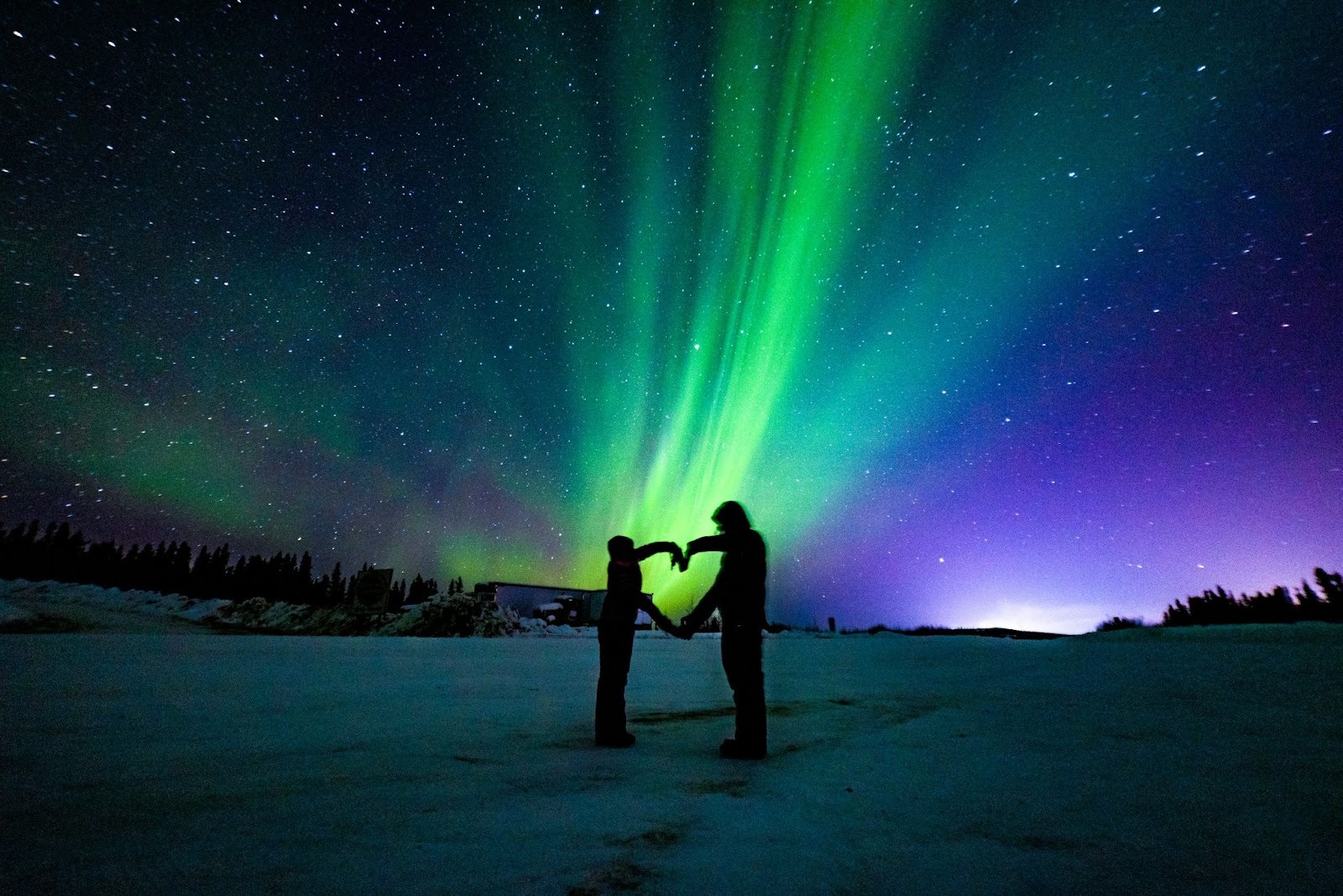
Experience shows that it’s not so much which city sees the Northern Lights most often, but rather the viewing conditions that matter. The farther you are from populated areas, the better your chances. Light pollution is the main factor that reduces visibility.
Mobility is also important. Guided tours allow you to quickly change your observation location, while independent trips offer greater flexibility when the forecast is favorable.
Before booking, it’s worth checking:
How far the accommodation is from urban areas.
Possibility of traveling beyond populated areas.
Climate and average cloud cover in the region.
Forecast of the KP index, reflecting geomagnetic activity.
Northern Lights tours are suitable for those who don’t want to deal with forecasts and logistics. Independent trips are more often chosen by experienced travelers.
Comparison of formats:
Cost: Tours are more expensive.
Flexibility: Higher with self-planned itineraries.
Chance of success: Higher with professional guides.
Visa requirements depend on the traveler’s citizenship and the chosen destination. A number of countries where the Northern Lights are frequently observed have visa or entry restrictions that are important to consider in advance. Trips to Norway, Finland, and Iceland will require a valid Schengen visa for travelers from outside the Schengen area. Travel to Canada and the United States requires a national visa. For entry into Russia, most foreign nationals also need a visa; however, citizens of certain countries can apply for an electronic visa through a simplified process with relatively short processing times.
It’s best to plan your trip well in advance, as visa processing times often exceed the duration of the Northern Lights season itself. For complex itineraries and combined trips, it makes sense to clarify visa requirements early in order to choose the optimal destination and avoid missing a suitable travel window. Terrana specialists can help select the most convenient visa and itinerary scenario, taking into account your citizenship, goals, and trip format.
Proper preparation is the key to comfortable viewing. The main challenges are not finding the aurora itself, but dealing with the cold and long periods of waiting.
What to take with you:
Layered warm clothing.
Thermal underwear and face protection.
A smartphone or camera with night mode.
Common beginner mistakes include expecting a spectacular display every night and believing that the Northern Lights can be seen during the daytime.
The glowing arcs and waves in the sky are an experience that cannot be fully captured in photos. The display changes every minute, never repeats itself, and creates a strong sense of witnessing a rare moment. That is why seeing the Northern Lights is considered one of the most powerful natural experiences — one that stays in your memory for years.
Q: Can you see the Northern Lights in just 2–3 days?
A: Yes, but without any guarantee. Short trips are best planned to regions where the Northern Lights are statistically observed most frequently.
Q: Is the aurora dangerous?
A: No, it is safe for humans.
Q: Is it possible that the Northern Lights aren’t visible at all?
A: Yes. Even during the season this can happen due to bad weather or low solar activity.
Q: Is it worth traveling “just hoping to get lucky”?
A: It’s better to travel with a clear understanding of the conditions and with extra days built into your schedule. This significantly increases the chances of seeing the Northern Lights.


